
September 28, 2026
Mortgage Rates Hit 7.5% — What’s Driving the Move?
If it feels like mortgage rates have been moving in the wrong direction lately… you’re not imagining it.
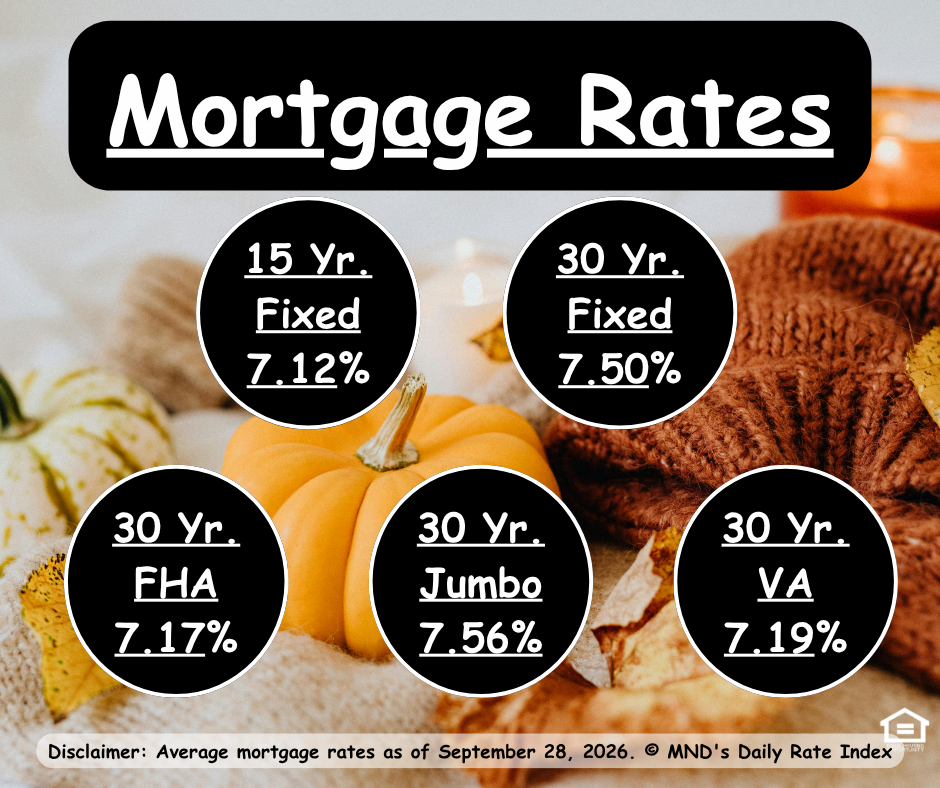
According to Mortgage News Daily, the average top-tier 30-year fixed mortgage rate climbed to 7.50% on September 28, its highest level since April 2024. Just two weeks earlier, rates were more than half a percentage point lower.
So, what happened — and more importantly, what does it mean if you’re buying, selling or already under contract?
📈 Why Did Rates Jump?
There isn’t one single culprit.
We’ve talked a lot this year about oil prices and geopolitical uncertainty putting pressure on the bond market. But the latest rate increase can’t be explained by oil alone.
Instead, several factors are piling on at the same time:
Stronger economic data. A resilient economy can keep inflation concerns alive, which tends to put upward pressure on longer-term interest rates.
Bond market weakness. Mortgage rates are heavily influenced by mortgage-backed securities and the broader bond market. Recently, bonds have experienced significant selling pressure — and when bond prices fall, yields and mortgage rates generally rise.
Treasury supply and demand. Increased Treasury supply and shifting investor demand have also contributed to higher yields.
Uncertainty about what comes next. Markets are watching upcoming economic reports closely. Stronger-than-expected data could keep pressure on rates, while softer data could give bonds — and mortgage rates — some room to recover.
🏦 Wait… Didn’t the Fed Just Change Rates?
Yes — but this is where things get confusing.
The Federal Reserve controls the Fed Funds Rate, not mortgage rates. Mortgage rates are much more closely tied to the bond market and expectations about inflation, economic growth and future Fed policy.
That means mortgage rates can move before, after or even in the opposite direction of a Fed decision.
So when you hear that “the Fed changed rates,” it does not mean mortgage rates automatically changed by the same amount.
🏡 What Does This Mean for Buyers?
Higher rates absolutely affect purchasing power, but the headline rate isn't the whole story.
This is where strategy matters.
Depending on the buyer and property, we can look at options such as seller concessions, temporary buydowns, permanent rate buydowns, adjustable-rate mortgages and different loan programs to determine what makes the most sense.
And remember: the rate you start with doesn't necessarily have to be the rate you keep forever.
If rates improve later, refinancing may become an option. The goal is to make sure the numbers make sense today without depending on a future refinance to make the purchase affordable.
🤝 What Does This Mean for Sellers & Agents?
When rates move quickly, buyers feel it.
A buyer who qualified comfortably a few weeks ago may have less purchasing power today. That makes conversations around seller concessions and financing strategy even more important.
Before automatically jumping to a price reduction, let’s run the numbers.
In some situations, using seller concessions toward a buyer's financing costs can have a bigger impact on their monthly payment than using those same dollars for a price reduction.
That’s where having the lender involved early can make a BIG difference.
🐼 Bottom Line
Rates are higher, and the market is volatile. But that doesn't mean buyers should panic — or sellers should assume there are no options.
It means we need to run the numbers, understand the options and have a strategy.
If you're thinking about buying, refinancing or have a client trying to figure out what these rates mean for their purchasing power, reach out. I’m happy to run the scenarios and help you figure out the best way forward.
Rate information based on Mortgage News Daily's national rate index as of September 28, 2026. Actual interest rates and terms vary based on loan program, credit profile, property type, loan amount and other factors.

