
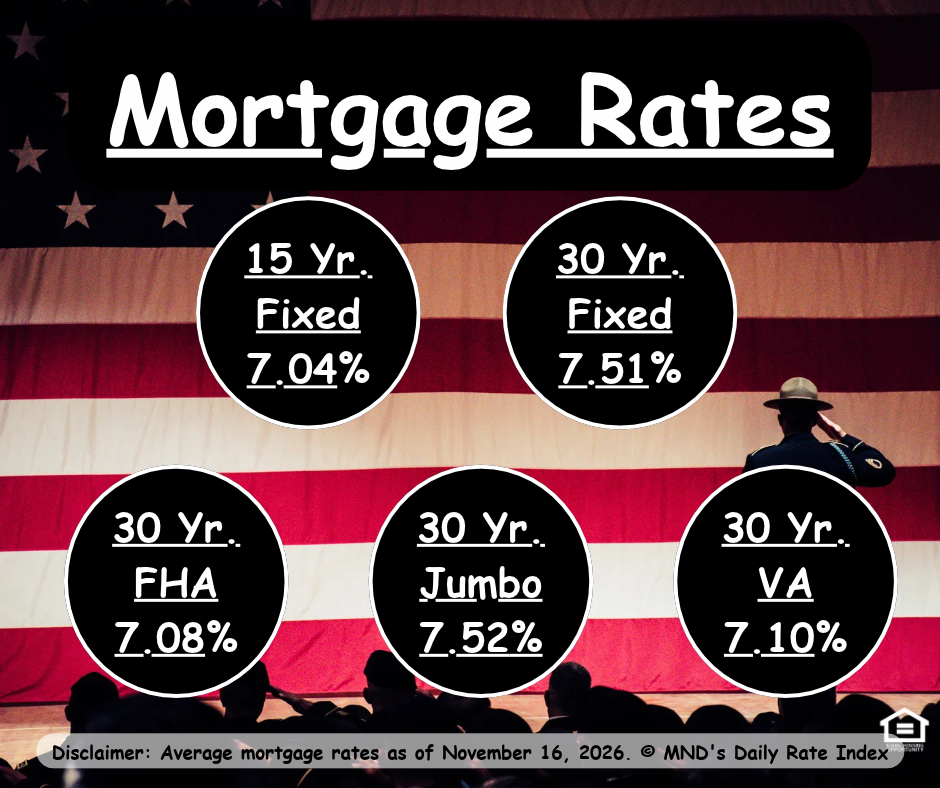
These are national market averages, not individual loan quotes. Your actual rate depends on your credit profile, loan program, down payment, property details, and other factors.
🏡 Mortgage Rates Hit a Speed Bump. Should Buyers Hit the Brakes?
Just when mortgage rates seemed to be finding their groove, the market decided to throw us another curveball. After several weeks of relatively encouraging movement, rates climbed last week, reminding us that the mortgage market rarely travels in a straight line.
But here's the question I want buyers and homeowners to consider: Does a higher interest rate mean your homeownership plans need to go on hold? Not necessarily. It means we need to look at the numbers, understand what's changing, and make a plan that works for you.
📈 What Happened to Mortgage Rates This Week?
According to Mortgage News Daily, the average 30-year fixed mortgage rate reached 7.51% on Monday, November 16, compared with 7.18% the previous Monday. That's an increase of 0.33 percentage points in just one week and the highest reading in more than a month.
The biggest changes happened last week, when inflation concerns rattled the bond market. Monday's movement was much calmer, with the 30-year average increasing just 0.01 percentage points from Friday.
🔥 Why Did Rates Change Direction?
Inflation continues to be one of the biggest influences on mortgage rates. When inflation comes in hotter than expected, investors worry that borrowing costs may need to remain elevated longer than previously anticipated.
That's exactly what happened when the November 10 Consumer Price Index report surprised markets. Mortgage rates moved higher, and additional bond-market weakness later in the week added pressure.
Here's something important to remember: The Federal Reserve doesn't directly set mortgage rates. Mortgage pricing responds to the bond market, especially mortgage-backed securities, which react to inflation expectations, economic data, and investor sentiment.
That's why rates can change even when the Fed hasn't made a move.
🏠 What Does This Mean for Homebuyers?
If you're shopping for a home, I wouldn't recommend making your entire decision based on what happened to rates over the past few days. Instead, let's focus on what you can control.
Your monthly payment matters, but so do your purchase price, available savings, seller concessions, and long-term financial goals. A home that fits your needs and budget may still be a great opportunity, particularly when a seller is willing to negotiate.
We're continuing to explore strategies like seller-paid closing costs and temporary interest rate buydowns to help buyers manage their upfront expenses or initial monthly payments. These tools aren't right for every transaction, but they're worth discussing before assuming a home is out of reach.
The goal isn't to convince you to buy regardless of the market. It's to help you understand what your options actually look like.
🤝 Sellers, Your Strategy Matters Too
Buyers are paying attention to affordability, and sellers who recognize that have an opportunity to stand out.
Instead of automatically reducing the listing price, it may be worth evaluating whether a seller concession could help a qualified buyer with closing costs or a temporary rate buydown. Depending on the buyer's financing and the transaction details, that contribution may make a meaningful difference.
Of course, there are loan-program limits and qualification requirements, so the numbers need to be reviewed before making promises in a listing.
For my real estate agent partners, this is where collaboration becomes especially valuable. Let's run the financing scenarios before deciding which incentive to advertise. Sometimes the most compelling offer isn't the biggest price reduction. It's the one that solves the buyer's biggest affordability challenge.
⏳ Should You Wait for Rates to Come Back Down?
It's tempting to wait for the perfect rate, but no one can reliably predict when that will happen.
Rates could improve as economic conditions change, or they could remain elevated longer than expected. Waiting may be the right decision for some buyers, especially if their finances or timeline aren't ready. For others, the better approach may be to explore available homes, understand their payment comfort zone, and move forward when the numbers make sense.
And yes, refinancing could become an option if rates improve in the future, but it isn't guaranteed. Future eligibility, property value, closing costs, and market conditions all matter.
Make today's decision based on today's numbers, not a future refinance you're hoping will happen.
🐼 The Mortgage Mama Bear Takeaway
Mortgage rates have hit a speed bump, but that doesn't mean your homeownership goals have to hit the brakes.
The smartest buyers aren't necessarily the ones who time the market perfectly. They're the ones who understand their financing, know their comfort zone, and have a strategy before they start making offers.
Whether you're buying your first home, moving into something that better fits your life, or wondering if refinancing makes sense, I'm here to help you sort through the numbers without the pressure.
Let's taco 'bout your options! Schedule a time on my calendar, and we'll build a mortgage strategy around your goals.
Disclaimer: Mortgage rates and loan programs are subject to change without notice. National averages are provided for educational purposes and are not an offer to lend or a guarantee of financing. Rates, terms, and eligibility depend on individual qualifications, property details, and lender requirements. Temporary buydowns and seller concessions are subject to program guidelines.

