
Rates Hold Near Recent Lows as Inflation Data Takes Center Stage
After a roller coaster of mortgage rate movement this fall, we're finally seeing a little breathing room for homebuyers. Mortgage rates have improved from their early October highs, and despite some surprising economic news, they've managed to hold onto most of those gains.
But before we start celebrating, there's another important economic report on the horizon that could determine where rates head next.
Let's taco 'bout what's happening in the mortgage market, why it matters, and how buyers can make the most of the opportunities available today.
📊 Strong Jobs Report, Surprisingly Steady Mortgage Rates
Normally, a stronger-than-expected jobs report sends mortgage rates higher. A healthy labor market can keep inflation concerns alive, making investors less enthusiastic about bonds and putting upward pressure on mortgage pricing.
That's why Friday's market reaction was so interesting.
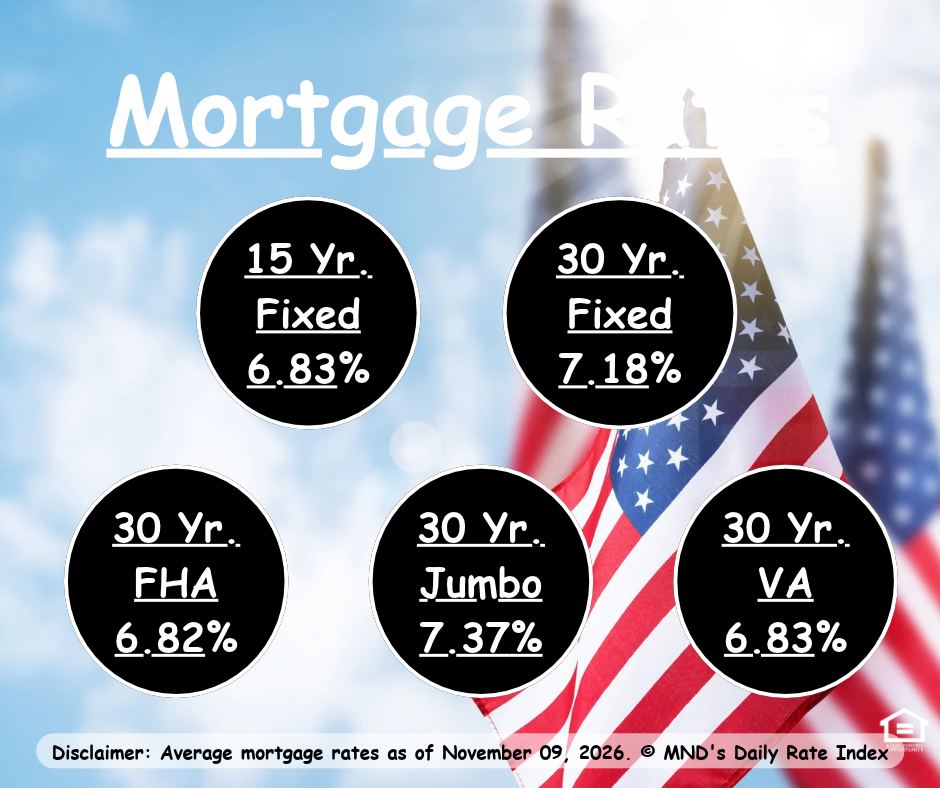
The November 6 employment report showed significantly stronger job growth than economists expected, yet mortgage rates barely moved. Instead of jumping higher, the average 30-year fixed rate held steady at 7.17%.
One possible explanation is that investors have been paying closer attention to stock market volatility, particularly in the technology sector. Recent weakness in stocks has helped support bond prices, which can create favorable conditions for mortgage rates.
The takeaway? Mortgage rates don't respond to any single economic report in isolation. It's the combination of inflation expectations, economic growth, investor sentiment, and bond market activity that ultimately drives mortgage pricing.
🔍 Inflation Is the Next Big Market Test
This week, attention turns to the upcoming Consumer Price Index (CPI) report, one of the most closely watched measures of inflation.
Why does that matter to someone buying a home?
Mortgage rates are heavily influenced by inflation expectations. When inflation appears to be cooling, investors may become more comfortable accepting lower yields on bonds, potentially helping mortgage rates improve. If inflation comes in hotter than expected, the opposite can happen.
The Federal Reserve's interest rate decisions also influence financial markets, but there's an important distinction: the Fed does not directly set 30-year mortgage rates. Mortgage rates are more closely tied to longer-term bond markets and mortgage-backed securities.
That's why I always encourage buyers and real estate agents to look beyond the headlines about Fed meetings. Understanding what the bond market is doing often gives us a much clearer picture of what's happening with mortgage rates.
🏡 What Does This Mean for Homebuyers?
If you've been waiting for mortgage rates to come down before purchasing a home, this recent improvement is worth paying attention to. But waiting for a particular number can sometimes mean overlooking opportunities that already exist.
For example, on a $400,000 mortgage with a 30-year term, the difference between 7.61% and 7.18% is approximately $117 per month in principal and interest. That's roughly $1,400 annually, without accounting for taxes, insurance, or mortgage insurance.
Of course, affordability involves more than the interest rate. Your down payment, closing costs, loan program, seller concessions, and long-term financial goals all play a role in determining whether a home makes sense for you.
This is where working with an experienced mortgage broker can make a difference. Rather than focusing on a single rate, we can compare multiple loan programs, evaluate available financing options, and build a strategy around your actual goals.
🤝 What Should Real Estate Agents Be Telling Buyers?
For my real estate partners, this is a great opportunity to reconnect with buyers who stepped away from the market when rates climbed earlier this fall.
Those buyers may not realize that mortgage rates have improved, and even a modest change could make a difference in their monthly payment or purchasing strategy.
Consider reaching out to clients who were previously prequalified but decided to wait. Instead of simply asking whether they're ready to start looking again, offer to have their financing numbers updated.
It's also a great time to revisit conversations about seller concessions, temporary or permanent rate buydowns, and loan programs that could help buyers manage their upfront costs.
Remember, our job isn't to convince someone to purchase before they're ready. It's to make sure they have accurate information so they can recognize an opportunity when it fits their needs.
🐼 The Mama Bear Takeaway: Strategy Beats Speculation
Could mortgage rates continue improving? Absolutely. Could the next inflation report send them in the opposite direction? That's possible, too.
Nobody has a crystal ball, and if someone tells you they can predict exactly where mortgage rates will be next month, I'd love to borrow it!
What we can do is prepare.
Whether you're purchasing your first home, moving into your next chapter, or helping a buyer navigate today's market, the best strategy starts with understanding your options and having a plan that works regardless of what the headlines say.
Let's Taco 'Bout Your Home Loan! 🌮
If you're a homebuyer wondering whether today's mortgage rates could work for your budget, or a real estate agent with clients who need updated financing options, let's connect.
I'll help you compare programs, understand the numbers, and put together a mortgage strategy that makes sense for your next move.
Mortgage rates are subject to change without notice. This article is for educational purposes and does not constitute a commitment to lend or an offer of specific loan terms. All loans are subject to qualification and underwriting approval.

