
August 24, 2026
Mortgage Rates Start the Week Quietly — Here’s What Actually Matters
If you’re watching mortgage rates and wondering whether every Treasury headline is something to worry about, here’s your Monday reminder: not every piece of financial news deserves your attention.
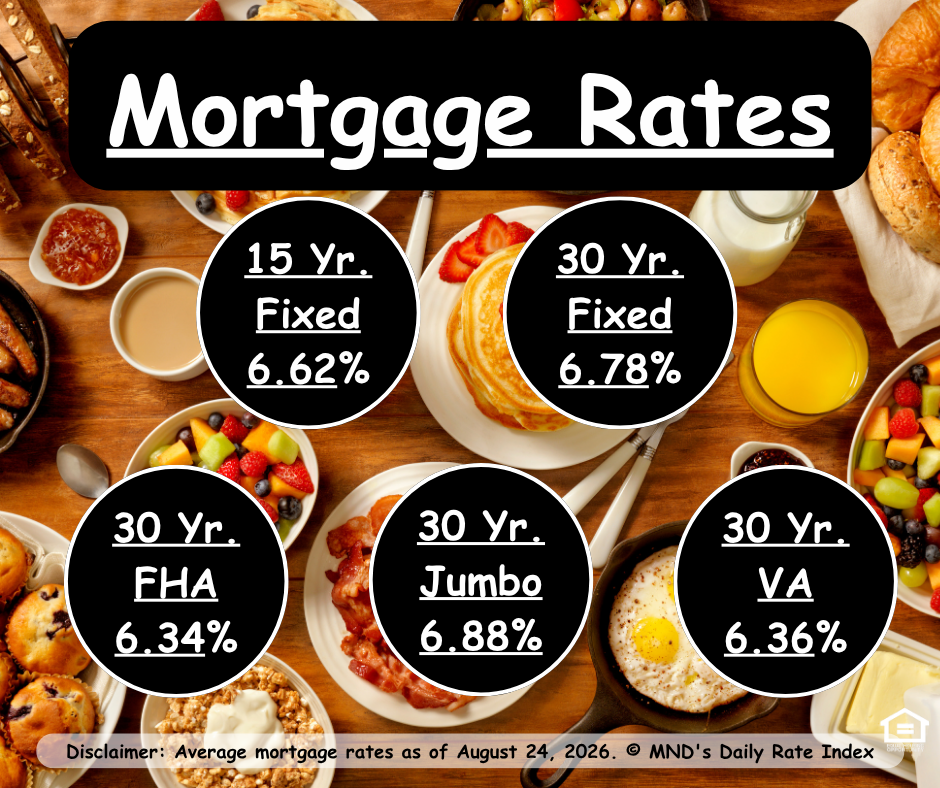
Mortgage rates are starting the week essentially unchanged, with the average lender microscopically higher than Friday. But there’s a little more to the story.
Why Rates Are Slightly Higher Even Though Bonds Improved
Mortgage rates are heavily influenced by the bond market, and bonds actually improved slightly compared with where they closed on Friday.
So why didn’t mortgage rates improve too?
Timing.
Mortgage lenders set Friday’s rates earlier in the day, when bonds were trading at some of their best levels. By the time the bond market closed, conditions had weakened.
That means today’s bond improvement looks better when compared with Friday’s closing levels—but compared with the time lenders were actually setting mortgage rates, the market is basically flat to slightly weaker.
Translation: there really wasn’t enough improvement for lenders to offer better rates today.
Treasury Buybacks: Lots of Headlines, Not Much Impact on Mortgage Rates
There has also been plenty of chatter surrounding the Treasury’s bond buyback program.
Last week, Treasury announced higher limits for individual buyback operations, and the headlines made it sound like this could potentially provide meaningful relief for interest rates.
It didn’t.
More large numbers are making headlines this week, this time involving the Treasury General Account—essentially the federal government’s checking account—and the potential size of future buybacks.
But here's what matters for homebuyers and homeowners:
A larger Treasury buyback program does not automatically mean lower mortgage rates.
Larger buybacks would generally come alongside larger Treasury issuance. The buybacks can influence where yields sit along the yield curve, but they aren't necessarily going to lower overall interest rate levels.
Mortgage-backed securities—the bonds most directly connected to mortgage pricing—also tend to trade more closely with the middle portion of the yield curve. So even aggressive Treasury buybacks focused on longer-term 10- to 30-year securities may provide little direct benefit to mortgage rates.
In other words, this is one of those headlines you can safely tune out.
What Actually Helped Bonds Today?
The much simpler answer: lower fuel prices.
Falling fuel prices can ease inflation concerns, and lower inflation expectations are generally good for bonds. Stronger bonds can eventually translate into better mortgage rates if the improvement is large enough and lasts long enough.
Today, it wasn't enough to create a meaningful change in mortgage pricing—but it was the real driver worth watching.
The Mortgage Mama Bear Take
Mortgage rates don't move because of one headline, one Treasury announcement, or one dramatic financial news story.
They move based on how the bond market processes inflation, economic data, Federal Reserve expectations, geopolitical developments, energy prices, and investor demand.
And sometimes, the most important part of a daily rate move is simply what time it happened.
That's why I don't recommend trying to time the mortgage market based on headlines. Instead, we look at your numbers, your payment, your timeline, and the options available for your specific situation.
Because the question isn't just, "What's the rate today?"
It's "What makes sense for you today?"
If you're buying, refinancing, or just trying to figure out whether today's market creates an opportunity, reach out. I'll help you sort through the noise and focus on the numbers that actually matter.

